Collaborative Missions in Urban Areas – Paris

✅ Finalized

📍 Paris, France

About

🗓️ Start: 2024-06-01

⇨

🗓️ End: 2025-12-31
The pilot tested a distributed edge-to-cloud platform for flood detection and rescue-mission coordination, for a major Seine flood scenario in Paris-Saclay, with the 2024 Valencia floods as context. Real-time environmental sensors and on-site edge processing were combined to detect rising water levels faster and keep emergency teams coordinated across a city. The main challenge addressed was connecting scattered, mixed-hardware emergency infrastructure into one fast, reliable system; the solution tested was a self-coordinating network of edge sites able to deploy and scale with minimal manual intervention.

Short Description

The pilot tested a distributed edge-to-cloud platform for flood detection and rescue-mission coordination, for a major Seine flood scenario in Paris-Saclay, with the 2024 Valencia floods as context. Real-time environmental sensors and on-site edge processing were combined to detect rising water levels faster and keep emergency teams coordinated across a city. The main challenge addressed was connecting scattered, mixed-hardware emergency infrastructure into one fast, reliable system; the solution tested was a self-coordinating network of edge sites able to deploy and scale with minimal manual intervention.

Key goal or objective

To demonstrate that a distributed edge–cloud platform can detect flood conditions early and keep emergency teams coordinated in real time, while deploying and scaling with minimal human intervention.

Pilot participants

Thales (trial lead); ATOS, CYSEC, Kentyou, Siemens, I2CAT and EBOS (technology partners) — COGNIFOG project (Horizon Europe)

Pilot Overview

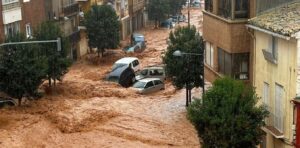
In 2024, severe floods struck Valencia, Spain, illustrating how quickly a crisis can outpace slow, fragmented emergency response: water levels passed danger thresholds within minutes and coordination between agencies broke down. The pilot scenario was a major Seine flood in Paris-Saclay; with this event as context, the pilot tested whether a distributed, largely automated edge–cloud platform could shorten the gap between flood detection and coordinated emergency response.

The pilot connected environmental sensors — water-level, air-pressure and wind sensors, alongside camera and drone feeds — to edge hardware processing data on site, with a cloud layer coordinating the wider response. Rather than a single central system, multiple edge locations were linked into one network that keeps working, and stays synchronised, even if the connection to central control drops. Particular emphasis was placed on removing manual work from deployment, so that new hardware could join the network with minimal human intervention.2024 Valencia floods, the real-world reference scenario for the pilot
Challenges Addressed

Relevant UTA challenge: Climate resilience and emergency management

  • Faster, earlier flood detection: water levels can cross danger thresholds within minutes, leaving little room for slow, manual monitoring.
  • Fragmented emergency coordination: agencies need real-time, shared situational awareness rather than disconnected systems.
  • Mixed hardware and platforms: sensors, gateways and servers of different types and architectures needed to work reliably together.
  • Heavy manual intervention: traditional deployment and coordination required hands-on set-up that a fast-moving crisis cannot wait for.

Solutions Tested

Relevant UTA solution: Edge–cloud computing for emergency response
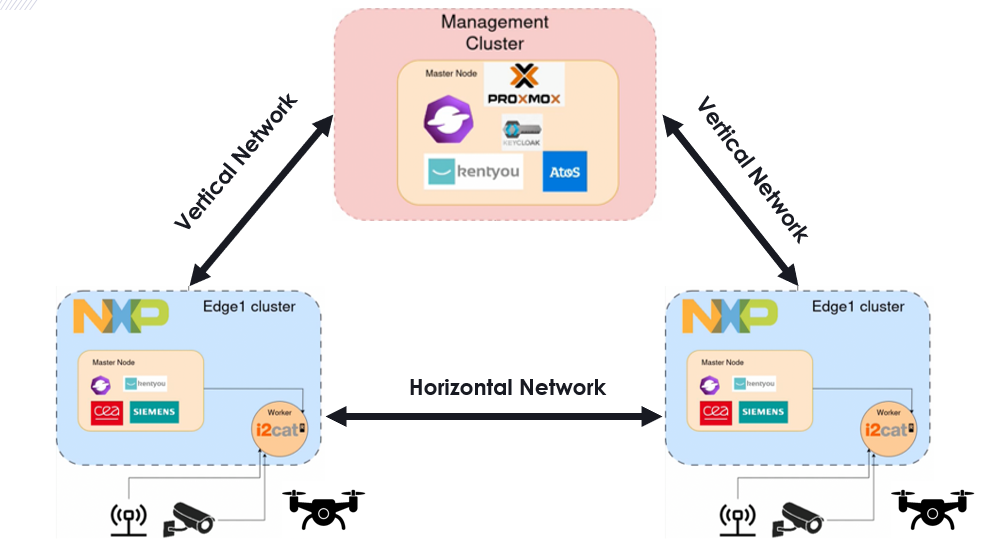
  • A hybrid edge-to-cloud, multi-cluster architecture, with a central management layer overseeing distributed edge sites.
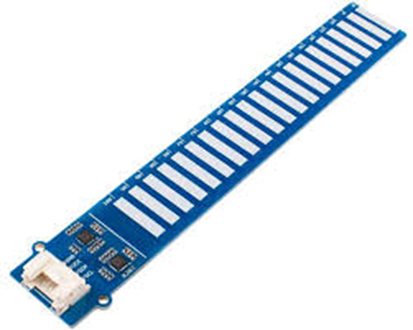
  • On-site sensing and processing, with water-level, air-pressure and wind sensors, plus camera and drone data, processed directly on edge hardware.
Water-level sensor used for real-time environmental monitoring
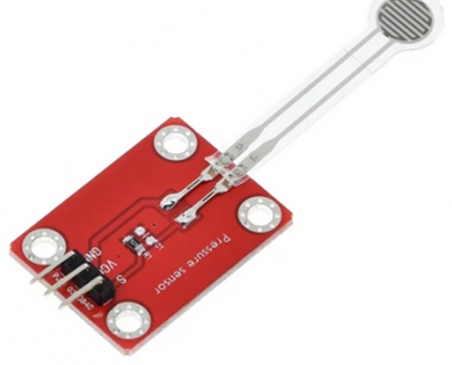
Air-pressure sensor used for real-time environmental monitoring
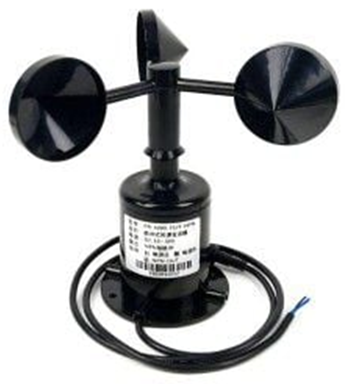
Wind sensor (anemometer) used for real-time environmental monitoring
  • A resilient, peer-to-peer network between edge sites, keeping operations running even during a control-plane outage.
  • Fully automated deployment: new edge hardware is provisioned and joins the network automatically as soon as it is connected, with no manual configuration.
  • A hardened, secure operating environment for edge devices, with unified monitoring across the deployment.
Distributed edge architecture for flood detection and emergency coordination
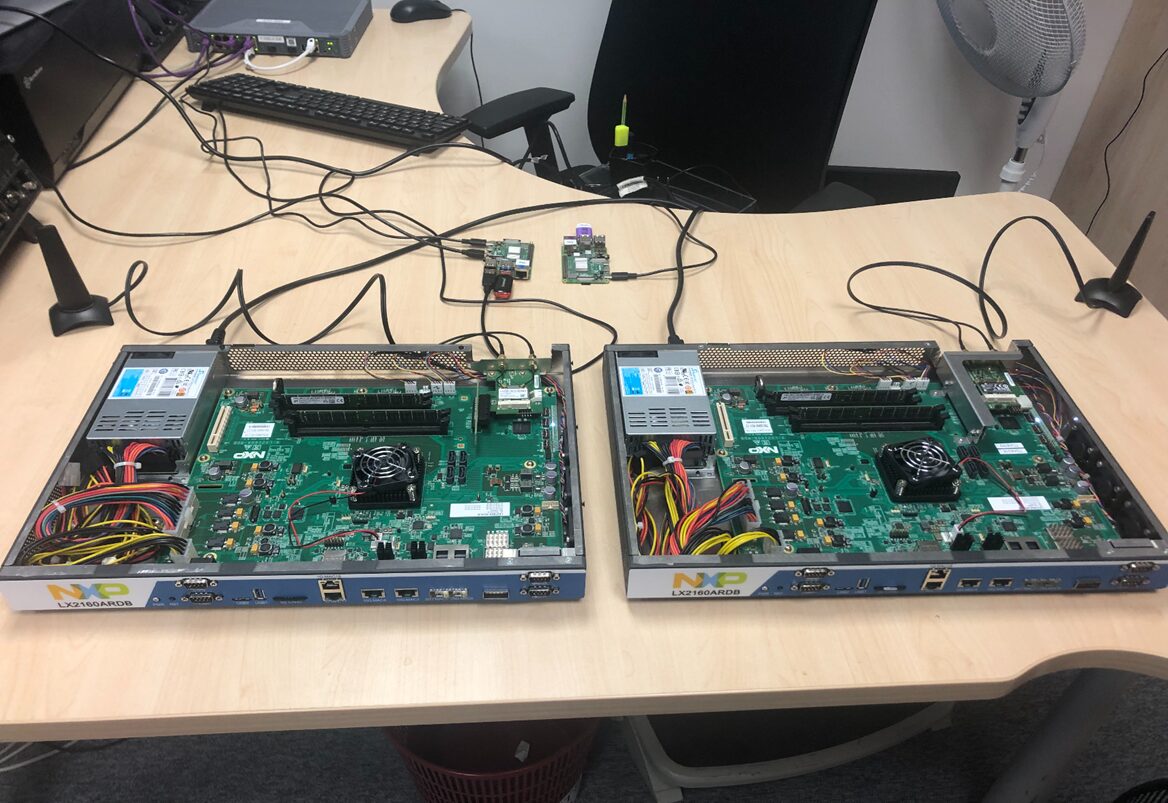
Edge hardware used in the pilot, configured and tested ahead of deployment
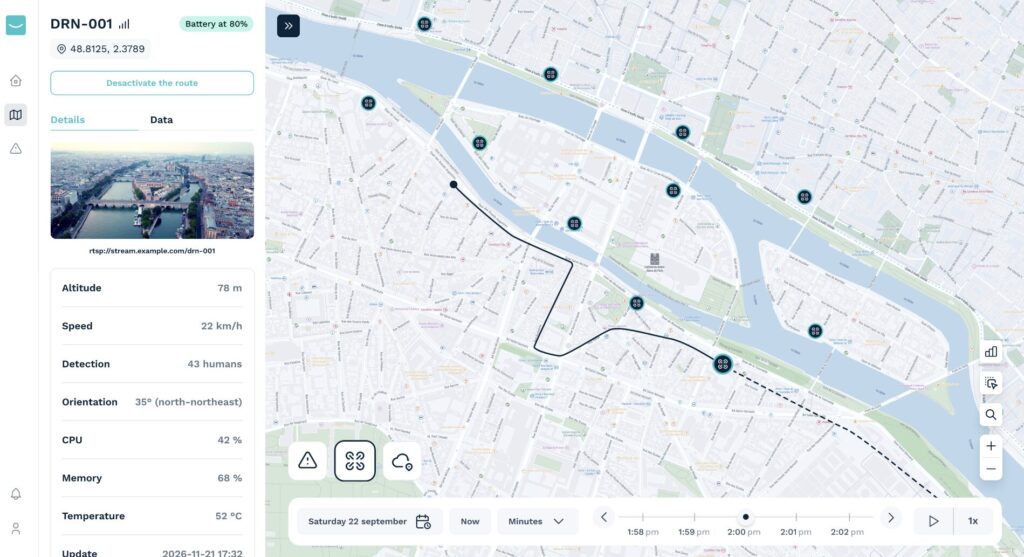
  • Real-time monitoring and visualisation through Kentyou Eye, providing a unified view of environmental sensor data, drone information, alerts and infrastructure status to support situational awareness and emergency coordination.

Current Status

Completed

Achieved Results

Key aspects that have been tested and demonstrated: distributed edge-to-cloud orchestration, automated deployment, real-time environmental sensing and resilient multi-site networking for flood detection and emergency-response coordination.
  • A single physical action — connecting a cable — was enough to bring new edge infrastructure fully online, with automated provisioning, operating-system installation and cluster integration, and no operator intervention required afterwards.
  • New applications were deployed to far-edge boards in under 5 minutes, and to edge nodes in under 1 minute.
  • Cloud-bound network traffic was measurably reduced, as more processing took place on site rather than centrally.
  • The network kept operating and stayed synchronised across multiple distributed sites, even under simulated disconnection from central control.

Drones registered and tracked through the pilot's monitoring platform

  • Emergency-response infrastructure can be brought online almost instantly, with virtually no manual configuration.
  • The system continues to operate reliably even if parts of it lose contact with central control.
  • Sensor and drone data is processed close to where it is collected, reducing delay and cloud bandwidth use.
  • The same automated approach can be repeated consistently across different sites and hardware types.
  • Running a federated, multi-site network is genuinely difficult; it stayed stable and synchronised only because deployment and monitoring were both automated.
  • Field sensor connections are not always reliable; local buffering addressed this, so readings are not lost when a connection briefly drops.
  • Real-time monitoring proved essential rather than optional, giving visibility that helps catch and predict problems early.
  • Mixing hardware architectures (standard servers and ARM-based edge devices) in one network takes deliberate engineering; it does not work “out of the box”.

The trial demonstrated that a distributed, largely automated edge–cloud platform can bring reliable orchestration and monitoring to a genuine emergency-response setting, validating both the technology and the underlying approach. It showed a scalable method for automated edge–cloud deployment that is applicable to other distributed, mission-critical environments beyond flood response.

The validated approach provides a foundation for extending automated edge computing to other distributed, mission-critical scenarios beyond flood response. The COGNIFOG platform and its open-source components remain available for continued development beyond the project’s completion.

Innovators

Share the Post: