
Urban Technology Alliance (UTA) and its members are participating in Urban-Flow, a four-year, €17 million Horizon Europe project supporting European cities in rebalancing urban space and mobility as part of their transition towards climate neutrality.
About the Urban-Flow project
Urban-Flow is a large-scale European initiative bringing together cities, research organisations, innovation networks and technology providers to develop, test and scale practical and transferable solutions for sustainable urban transformation. The project focuses on high-impact urban domains such as sustainable mobility, public space management and integrated urban planning, supporting cities in translating long-term climate ambitions into concrete, neighbourhood-level actions that improve urban liveability and resilience.
Role of Urban Technology Alliance and contribution of UTA members to Urban-Flow
As a consortium partner, Urban Technology Alliance contributes to Urban-Flow by strengthening collaboration between cities and solution providers and by facilitating the direct involvement of its members in EU-funded innovation activities. UTA plays a connecting role, ensuring that the technologies and expertise of its members are embedded in concrete project activities and pilot implementations.
Through Urban-Flow, UTA demonstrates its member-driven and pilot-oriented approach, enabling its members to move beyond networking and actively participate in large-scale European projects in collaboration with cities across different urban contexts.
Within Urban-Flow, UTA members are directly involved in supporting cities through their respective areas of expertise.
Kentyou contributes to the project by supporting the development and operational use of digital platforms for integrated urban planning and decision-making. Its activities focus on enabling the coordination of data from multiple urban systems, supporting scenario analysis and assisting city teams in translating strategic objectives into actionable implementation pathways.
Latitudo 40 contributes through its expertise in geospatial analytics and urban data processing. Within Urban-Flow, Latitudo 40 supports the analysis of urban mobility patterns, public space usage and environmental impacts at neighbourhood level, helping cities better understand spatial dynamics and assess the potential effects of different intervention scenarios.
Pilot cities and project implementation
Urban-Flow is coordinated by The Lisbon Council and brings together a diverse European consortium composed of academic and research institutions, innovation and policy organisations, technology providers and public authorities.
Pilot activities are carried out in the cities of Valencia, Florence and Tampere, while follower cities Brussels, Plzeň and Edinburgh support transferability and scaling across different urban and governance contexts.
A key component of the project is the use of local digital twins – high-resolution digital representations of real urban neighbourhoods – enabling city teams and solution providers to test scenarios, assess impacts, prioritise interventions and coordinate actions before implementation. This approach supports evidence-based decision-making and more efficient use of public resources.
Project kick-off in Valencia
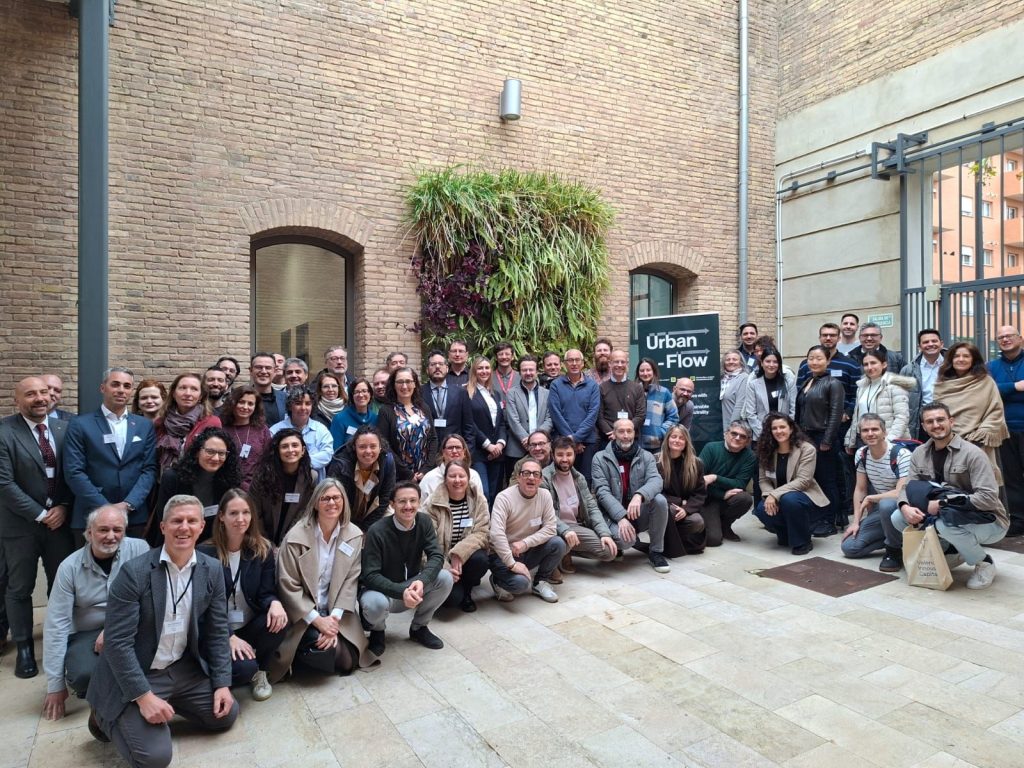
The Urban-Flow project was officially launched during the kick-off meeting held in Valencia, hosted by the City of Valencia. The meeting brought together representatives of consortium partners, pilot and follower cities, as well as European stakeholders, providing an opportunity to formally initiate the project and align on its overall objectives, scope and implementation approach.
During the kick-off meeting, partners participated in plenary sessions and thematic presentations outlining the project vision, governance structure, implementation timeline and expected outcomes. Dedicated sessions focused on the role of pilot and follower cities, collaboration mechanisms between cities and solution providers, and the use of digital tools to support evidence-based decision-making in urban mobility and public space planning.
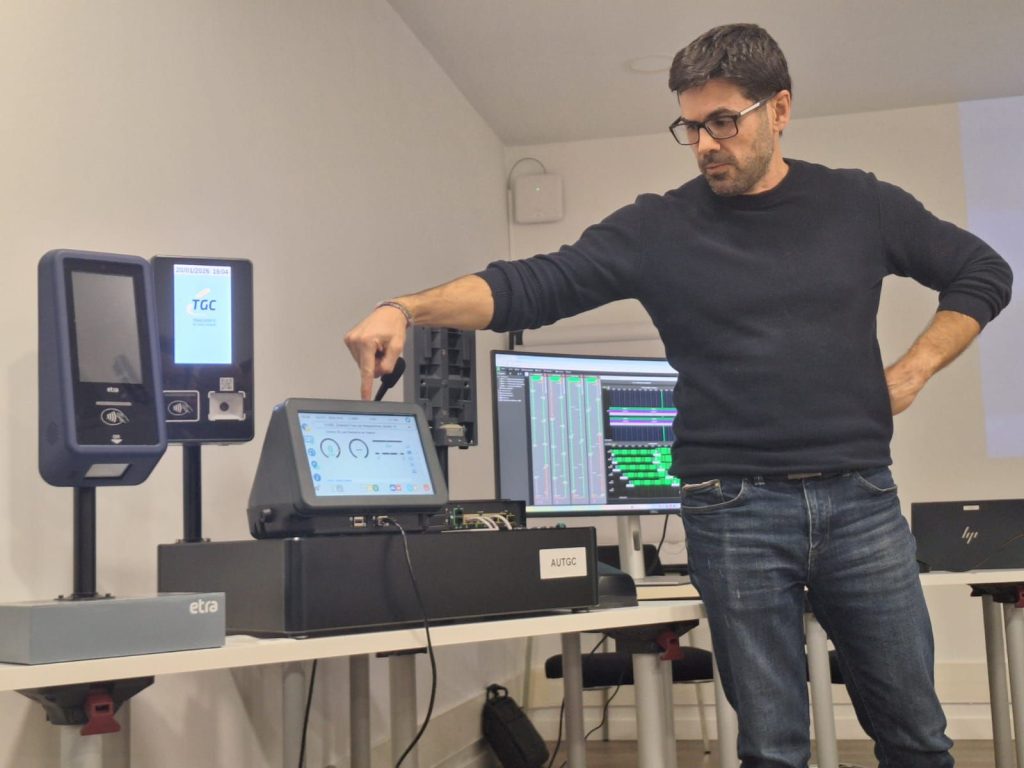
The kick-off also included a programme of site visits across several locations in Valencia, allowing partners to directly engage with local contexts and challenges addressed by the project. Visits included Valencia Sostenible, the city’s sustainability hub, the Energy Office of Ayora, and ETRA facilities, providing insights into existing local initiatives, technological infrastructures and operational practices relevant to Urban-Flow activities.
Particular attention was given to the neighbourhoods of La Torre, Horno de Alcedo and Castellar-Oliveral, which were heavily affected by the October 2024 DANA floods. These visits highlighted the importance of resilience, place-based approaches and integrated planning, reinforcing Urban-Flow’s focus on developing solutions that respond to real urban challenges and local priorities.
The kick-off meeting in Valencia laid a strong foundation for collaboration across the consortium, combining strategic alignment, technical exchange and on-the-ground understanding. It underlined Urban-Flow’s commitment to practical implementation, close cooperation with cities and the development of solutions that can be tested, validated and scaled across different European urban contexts.
What comes next
Urban-Flow will proceed with the detailed design, testing and validation of solutions in pilot cities, followed by knowledge transfer and scaling activities across Europe. Through its involvement in the project, Urban Technology Alliance will continue to support collaboration between cities and its members, contributing to the deployment of innovative solutions for climate-neutral and resilient urban development.
Urban-Flow runs from 2026 to 2030 under the Horizon Europe programme and contributes to the objectives of the EU Cities Mission, supporting the transition towards climate-neutral and smart cities across Europe.
More information
Urban-Flow Website
