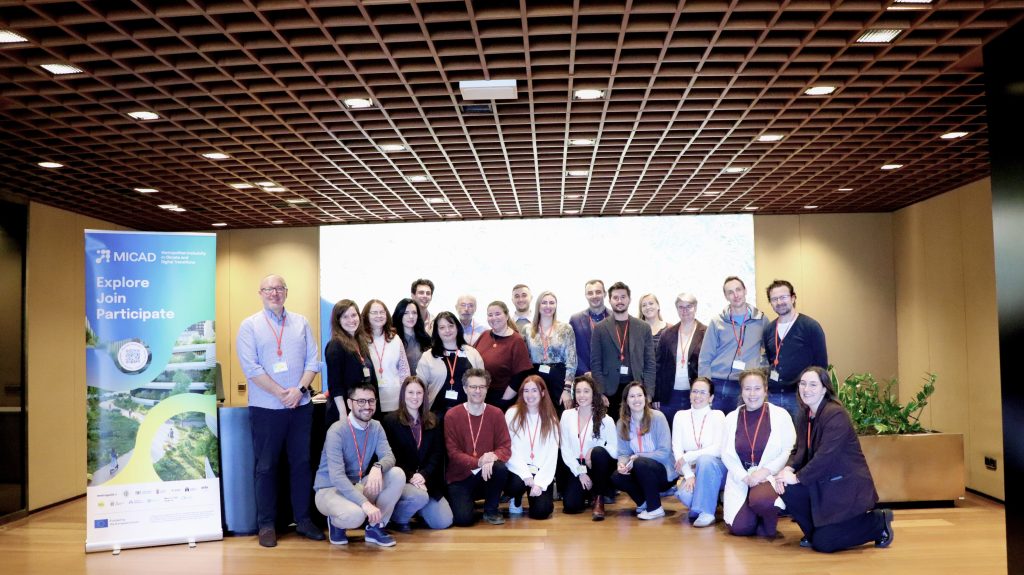
Last week at Àrea Metropolitana de Barcelona (AMB), partners of the MICAD Project – Metropolitan Inclusivity in Climate and Digital Transitions – gathered for the General Assembly of this Horizon Europe initiative. The meeting marked a decisive transition in the project’s trajectory: from analytical groundwork towards structured roadmap development and operational implementation.
MICAD addresses a central governance challenge facing European metropolitan areas: how to ensure that climate and digital transitions are not only technologically advanced, but institutionally coherent and socially inclusive.
Over the first phase of the project, the consortium focused on building a strong analytical foundation. This included assessing governance capacities, identifying structural and institutional barriers, and mapping existing digital and climate planning frameworks across five pilot metropolitan areas:
Àrea Metropolitana de Barcelona (Spain)
Città metropolitana di Milano (Italy)
Municipality of Tirana (Albania)
Primăria municipiului Chișinău (Moldova)
Górnośląsko-Zagłębiowska Metropolia – GZM (Poland)
The Barcelona General Assembly consolidated these findings and initiated the next phase: translating research into concrete metropolitan roadmaps.
Launching the Roadmap Co-Creation Process
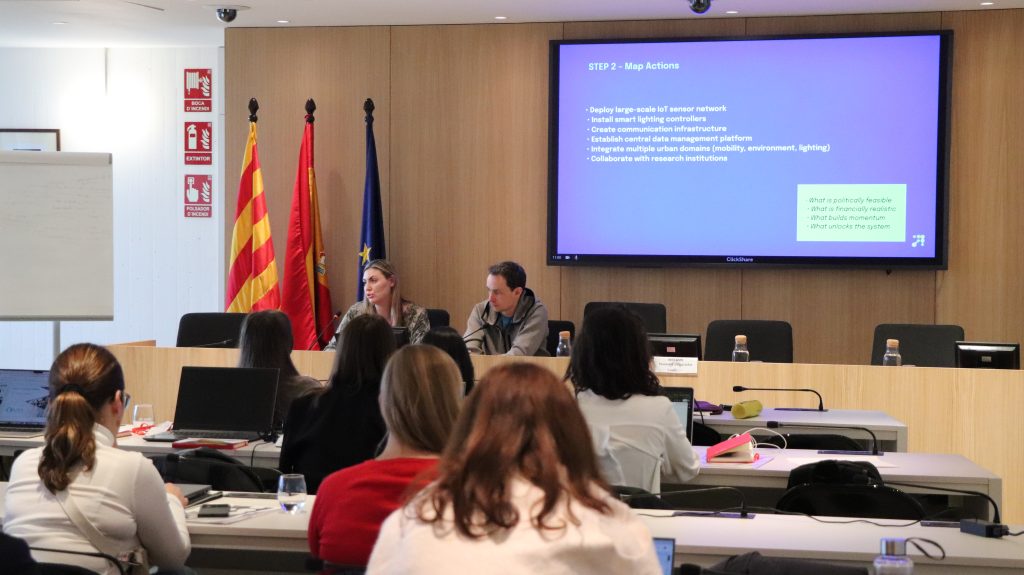
A central milestone of the Assembly was the Roadmap Development Workshop, co-facilitated by Urban Technology Alliance and Kentyou.
This session formally launched the structured co-creation process through which each pilot metropolitan authority will develop its climate and digital transition roadmap in 2026. Rather than treating roadmaps as abstract strategic documents, the workshop focused on operationalisation.
Discussions addressed:
- Thematic priorities and transition focus areas
- Territorial scope and governance level alignment
- Institutional responsibilities and coordination mechanisms
- Sequencing of actions and feasibility constraints
- Links between political ambition, financial realism and implementation capacity
The approach emphasised practicality: defining what is politically viable, financially realistic, institutionally anchored and capable of building momentum.
The session marked the operational starting point of the project’s next phase – moving from comparative analysis towards structured transformation pathways at the metropolitan scale.
Strengthening the MICAD Toolkit
In parallel, the Assembly included a dedicated Toolkit Workshop moderated by the Metropolitan Research Institute.
The MICAD Toolkit for Inclusive Metropolitan Planning, currently in its prototype phase, is designed as a practical governance instrument supporting metropolitan authorities in managing complex transitions.
Cities and partners provided feedback on:
- Governance and institutional mapping modules
- Maturity and readiness assessment approaches
- Participatory co-creation frameworks
- Monitoring and evaluation mechanisms
- Integration of digital and climate dimensions within a single planning logic
This iterative process ensures that the Toolkit remains grounded in real metropolitan governance realities rather than theoretical constructs.
Open Session: Learning from Europe – Urban Digital Innovation
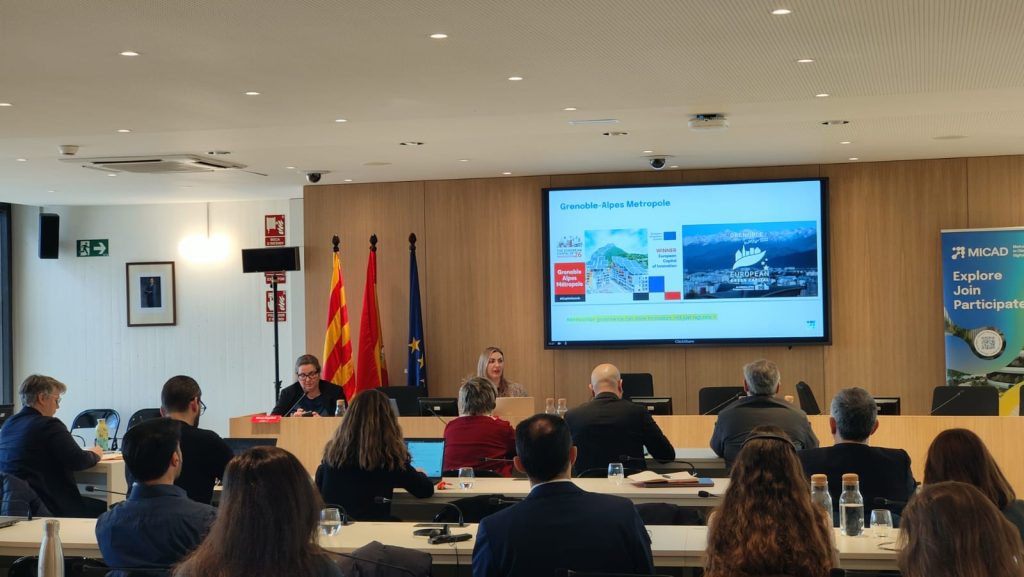
During the Open Session hosted by AMB, Dr. Maryna Gorobei (Urban Technology Alliance) delivered the presentation:
“Learning from Europe: Urban Digital Innovation”
The session explored how European metropolitan areas are structuring digital transformation to strengthen governance coherence, improve interoperability across municipalities, and enhance evidence-based decision-making.
Rather than focusing solely on technological deployment, the presentation highlighted digital transformation as a governance enabler. Key insights included:
- The role of interoperable digital infrastructure in reducing fragmentation
- The importance of cross-departmental coordination
- The integration of data systems into strategic climate planning
- The need for institutional alignment between metropolitan and municipal levels
The presentation positioned digital innovation as a structural component of metropolitan transition – not an isolated technological layer.
Climate and Digital Transitions: Beyond Parallel Agendas
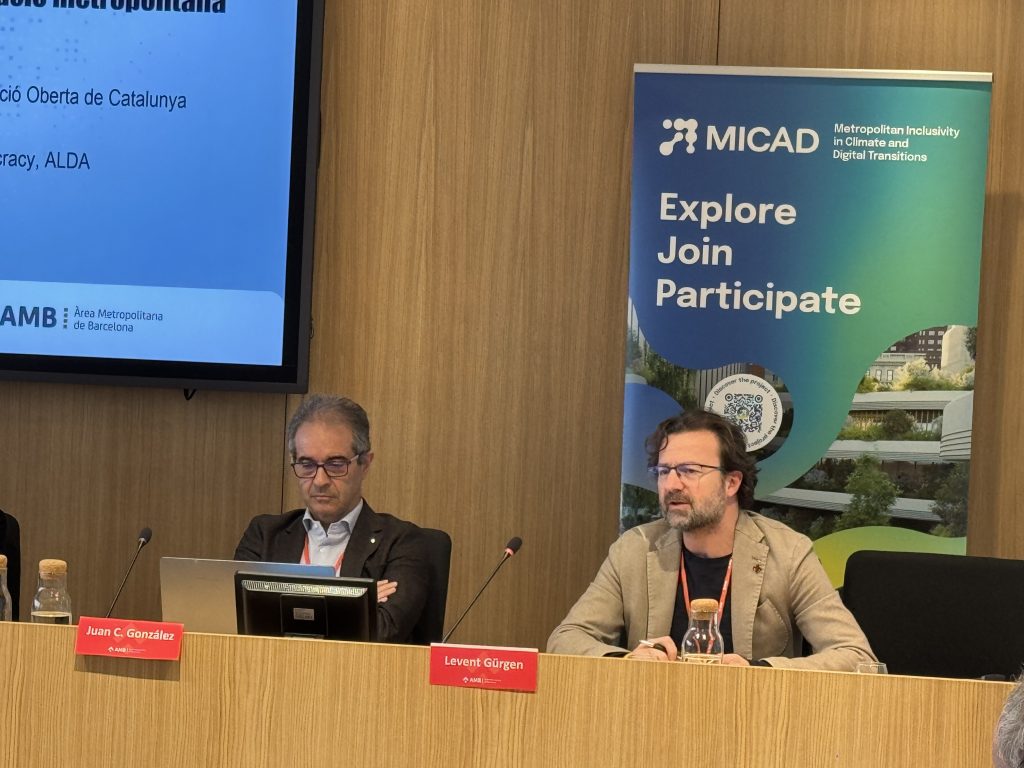
Urban Technology Alliance was prominently represented in the roundtable discussion dedicated to the relationship between climate and digital transitions.
Dr. Levent Gürgen, President of Urban Technology Alliance, contributed a systemic perspective grounded in long-standing experience in digital infrastructure and metropolitan innovation ecosystems.
In his intervention, he underlined that climate and digital transitions cannot be treated as parallel agendas implemented by separate departments or through isolated projects. According to his contribution, digital transformation must be conceived as an enabling governance layer — one that structures coordination, transparency and decision-making across metropolitan territories.
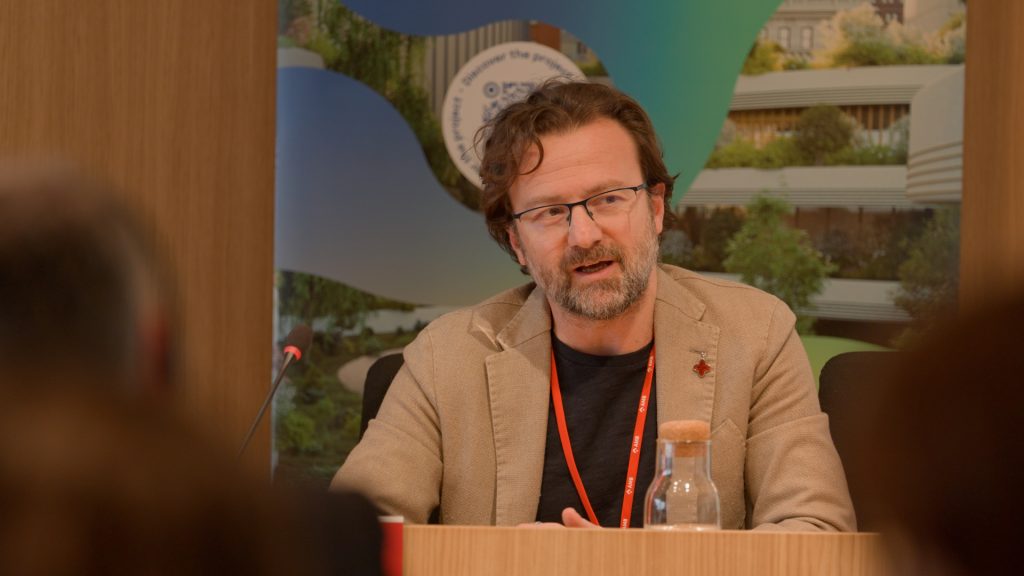
Levent emphasised three interrelated pillars:
1. Systemic Digital Infrastructure
He highlighted the importance of interoperable digital infrastructures as the backbone of metropolitan governance. Fragmented data platforms, disconnected IoT deployments and siloed digital initiatives risk reproducing institutional fragmentation rather than resolving it.
Instead, metropolitan authorities require coherent digital architectures that:
- integrate multiple urban domains (mobility, environment, energy, lighting, public services);
- enable cross-municipal coordination;
- support evidence-based policymaking;
- remain scalable and adaptable over time.
Digital infrastructure, in this framing, is not merely technical — it is institutional.
2. Meaningful Citizen Engagement
Levent also stressed that inclusive transitions depend on structured citizen participation. Digital tools should not only optimise services but strengthen democratic legitimacy.
He argued that metropolitan digital systems must be designed to:
- facilitate citizen engagement in planning processes;
- increase transparency in decision-making;
- support participatory governance mechanisms;
- reduce the gap between institutional planning and lived urban experience.
Without meaningful citizen involvement, digital innovation risks becoming technocratic rather than transformative.
3. Inclusive and Structured Decision-Making
Finally, he addressed the central role of decision-making processes. Metropolitan governance is inherently complex, involving multiple municipalities, agencies and political actors. Digital transformation should simplify and clarify decision pathways rather than add additional layers of complexity.
He emphasised that effective metropolitan transformation requires:
- clearly defined governance responsibilities;
- shared data environments;
- institutionalised coordination mechanisms;
- long-term strategic continuity beyond political cycles.
The roundtable discussion reinforced a core MICAD principle: climate and digital transitions must be structurally aligned. Digital transformation should strengthen institutional coherence and support climate action — not create parallel systems competing for attention and resources.
From Research Phase to Implementation Phase
The Barcelona General Assembly reflected a structural evolution within MICAD.
The first phase established a comparative and evidence-based understanding of metropolitan governance challenges. The second phase will focus on implementation: co-designing roadmaps, operationalising the Toolkit, and supporting metropolitan authorities in translating strategy into action.
For Urban Technology Alliance, this phase represents a continuation of its commitment to supporting cities and metropolitan authorities in navigating complex digital transitions that reinforce inclusivity, coordination and climate ambition.
As the project advances, the focus is clear: turning analysis into structured, implementable metropolitan roadmaps capable of delivering measurable and inclusive transformation.
Site Visits: Digital Capacity and Climate Resilience in Practice
Beyond strategic discussions and workshops, the General Assembly also included two site visits that grounded the project’s themes in real metropolitan practice.
Barcelona Supercomputing Centre – Digital Infrastructure at Scale
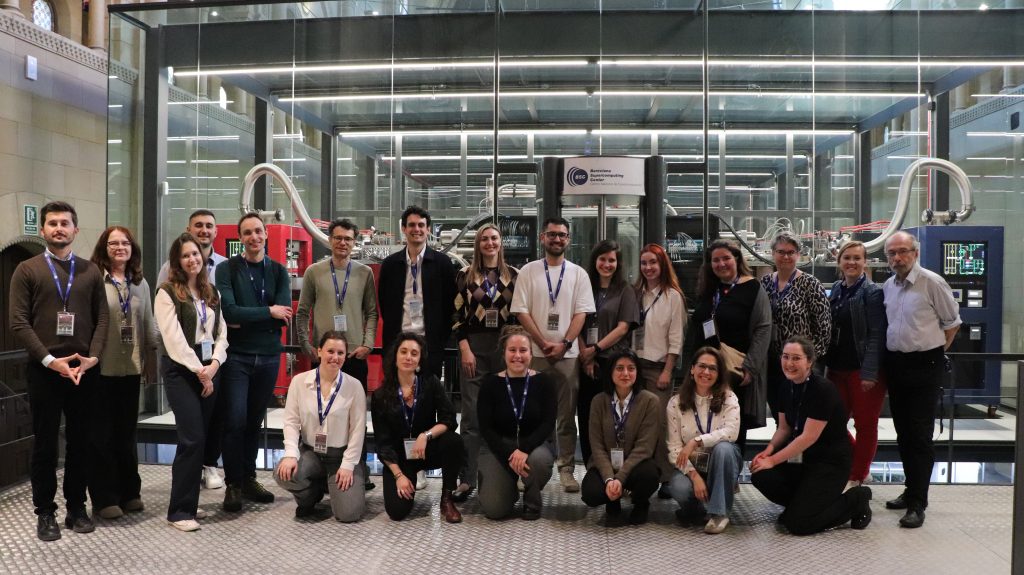
Participants visited the Barcelona Supercomputing Centre (BSC), home to one of Europe’s leading high-performance computing infrastructures.
The visit highlighted the strategic importance of advanced computing capacity for metropolitan governance. High-performance computing supports climate modelling, urban simulations, mobility optimisation, environmental monitoring and data-intensive research — all of which are increasingly relevant for metropolitan decision-making.
The discussion emphasised that digital transition at the metropolitan scale is not limited to IoT deployments or smart services. It also depends on robust data-processing capacity, secure infrastructure and scientific collaboration ecosystems.
The visit reinforced the link between digital infrastructure and evidence-based policymaking — a central theme of MICAD.
Climate Shelter – Local Adaptation in Action
The second visit focused on a climate shelter initiative in Barcelona, designed to protect residents from extreme heat events.
This initiative demonstrates how metropolitan climate strategies translate into tangible local interventions. Climate shelters provide accessible, cool spaces for vulnerable populations during heatwaves and form part of Barcelona’s broader urban adaptation strategy.
The visit offered a concrete illustration of inclusive climate action in practice — combining spatial planning, public health considerations and community-oriented governance.
Together, the two site visits reflected the dual dimension of MICAD’s approach:
- Digital infrastructure as an enabler of systemic metropolitan coordination
- Climate adaptation as a locally grounded, socially responsive intervention
By combining strategic dialogue with on-the-ground experience, the Barcelona General Assembly strengthened the project’s alignment between policy, technology and lived urban realities.
